

Spotify expands AI-powered “Prompted Playlists” to U.S. and Canada

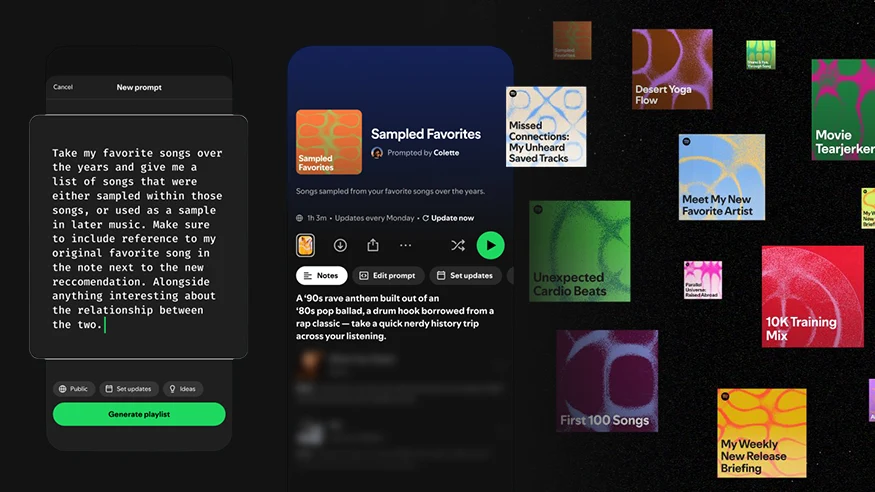
Spotify has begun rolling out its AI-powered “Prompted Playlists” feature to Premium subscribers in the United States and Canada, extending an experimental music discovery tool that allows users to create playlists using natural-language prompts.
The feature, which is launching in beta, enables listeners to describe what they want to hear in plain language — including moods, feelings, memories, or specific situations — rather than browsing genres, artists, or curated lists. Spotify previously tested the feature in New Zealand before deciding to expand it to North America.
The company said the broader rollout is part of its ongoing effort to make music discovery feel more intuitive and personalized, particularly as competition among streaming platforms intensifies.
Turning language into playlists
Prompted Playlists works by allowing users to type free-form text prompts into the Spotify app. Rather than choosing from preset options, users can describe a situation or mood in their own words, which Spotify’s system then translates into a playlist.
The feature can be found in the app’s Create menu, where users select “Prompted Playlist” and type in a description. Once created, the playlist can be edited manually, saved to a library, or shared with others.
Spotify says the AI interprets prompts using a combination of the user’s listening history, broader listening patterns across the platform, and contextual signals such as tempo, genre relationships, and popularity trends. The system curates tracks from Spotify’s existing catalog and does not generate new music.
Playlists designed to evolve
One notable aspect of Prompted Playlists is that they are designed to change over time. Users can choose whether a playlist refreshes automatically on a daily or weekly basis, allowing song selections to shift without the user having to re-enter a prompt.
According to Spotify, this feature is intended to reflect how moods and listening habits change, while keeping playlists relevant. Two users who submit the same prompt may receive different playlists, depending on their individual listening behavior and preferences.
Shared playlists retain this personalization, meaning recipients receive versions that are aligned with their own tastes rather than a static list of tracks.
A limited beta rollout
At launch, Prompted Playlists are available only to Spotify Premium subscribers in the U.S. and Canada and currently support English-language prompts. Spotify described the feature as a beta product and said availability may be adjusted as the company gathers feedback and monitors usage.
The company did not announce when the feature might expand to additional regions or languages, nor did it confirm whether it plans to make Prompted Playlists available to users on the free tier.
Spotify has also indicated that certain usage limits may be introduced or modified as the beta progresses.
Building on earlier AI efforts
Prompted Playlists builds on Spotify’s earlier AI-driven recommendation tools introduced over the past several years. While those systems largely operated in the background — automatically suggesting songs or playlists — the new feature places more control directly in the hands of users.
By letting users spell out what they want to hear in plain language, Spotify is effectively testing whether conversational input leads to stronger engagement than traditional music discovery tools.
The company has said the feature relies on large-scale machine learning models trained on listening data and relationships between songs and artists. Spotify emphasized that the AI’s role is limited to curation and recommendation.
Competitive and business context
The rollout comes at a time when Spotify is under pressure to differentiate its Premium offering. Spotify has raised subscription prices in several markets over the past few years, while also facing growing competition from rival streaming services with largely similar catalogs.
Industry analysts say features that deepen personalization may help justify higher prices and encourage long-term subscriber retention. However, it remains unclear how widely users will adopt text-based prompts as part of their regular listening habits.
Spotify has not disclosed early usage data from the New Zealand test or from the initial phase of the U.S. and Canada rollout.
What comes next
Spotify said it will continue adjusting Prompted Playlists during the beta phase, using feedback and usage patterns to guide changes. The company did not outline specific updates, though it indicated that additional prompt-related features could be added over time.
The rollout reflects Spotify’s broader effort to push generative AI deeper into its core product, while gauging how much direct control users want over recommendation systems that have long worked in the background.
Whether Prompted Playlists evolve into a common way people discover music, or stay limited to more engaged users, may ultimately depend on how naturally the feature fits into everyday listening habits.