
Anthropic Rolls Out New Claude AI Tools for Complex Workflow
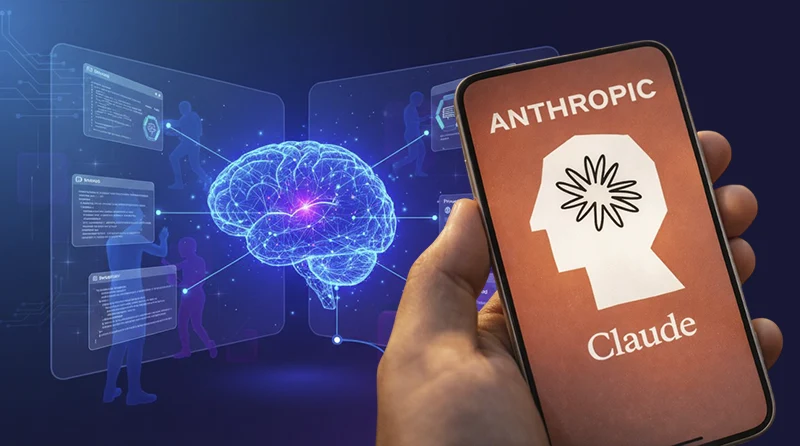
Anthropic is clearly making a move to take Claude beyond “helpful assistant” and into the territory of “useful operator.” With its latest rollout, the company is introducing new Claude tools meant to handle complex, multi-step workflows—work that normally forces teams to jump between documents, dashboards, emails, chat threads, and internal systems. The goal is straightforward: reduce the friction between thinking and doing.
At the center of the release is a set of workflow-focused capabilities that let Claude follow a more structured process. Instead of producing a single response and stopping there, Claude can now be configured to complete a sequence of actions: gather inputs, apply a consistent framework, generate outputs in the right format, and prepare the next step in the chain. That kind of “agent-like” behavior matters because most real business work isn’t one prompt—it’s a chain of small decisions and handoffs.
From Responses to Repeatable Workflows
Anthropic is also leaning into plug-ins and integrations that allow Claude to operate closer to where work actually happens. That means connecting into everyday tools—workplace communication, cloud storage, creative platforms, and operational systems—so Claude can pull the right context and produce usable outputs without requiring the user to copy and paste everything into a chat window. For teams, that’s a meaningful difference. It’s the difference between an AI that writes a draft and an AI that helps move the project forward.
What makes this rollout notable is not just the feature set, but the direction it signals. Anthropic is effectively saying: the future of AI isn’t only about better writing or faster summarization. It’s about reducing the coordination cost that slows down organizations. When an AI system can understand a task, reference the right materials, apply consistent standards, and deliver an output that fits into a broader workflow, it stops being “a tool you try sometimes” and becomes part of operations.
That shift is also why the market reaction has been sharp. The moment AI starts looking capable of handling repeatable professional workflows—especially in areas that have traditionally been protected by specialization—investors begin asking uncomfortable questions. If AI can absorb more of the drafting, analysis, classification, and standardization work that sits inside consulting, legal services, research products, and enterprise software, where does that leave revenue models built on time, complexity, and information access?
Why This Matters for Businesses (and the Market)
It’s important to be clear-eyed here. These tools don’t magically replace expert judgment. In domains like legal, compliance, finance, or healthcare, accountability doesn’t disappear because an AI can do a first pass. But first-pass work is where a large share of cost and time accumulates: early drafting, sorting, summarizing, pulling comparables, checking for inconsistencies, and preparing decisions for review. If Claude can reliably reduce that workload, the value proposition is immediate—especially for teams drowning in volume.
The more interesting long-term implication is standardization. Workflows are only “automatable” when the steps are defined. That means organizations will increasingly be rewarded for clear playbooks: how they name files, how they review contracts, how they qualify leads, how they structure reports, how they prepare proposals. In that sense, these tools may push companies to mature operationally—because the AI can only run what the organization can clearly describe.
Anthropic’s approach also reflects a broader trend: AI products are becoming less like standalone chat apps and more like platforms that sit on top of the modern work stack. The winners won’t simply have the smartest model. They’ll be the ones who make AI useful inside real constraints—permissions, compliance, audit trails, team collaboration, and repeatable quality control.
For businesses watching this space, the takeaway isn’t that “AI is coming.” That part is old news. The takeaway is that the battleground is shifting toward workflow ownership. The companies that figure out how to safely embed AI into repeatable processes—without sacrificing trust, consistency, or accountability—will move faster than competitors who treat AI as a novelty. And as these tools get easier to configure and integrate, the advantage will increasingly go to teams that can turn their expertise into systems, not just individual effort.