
Kandou AI Raises $225M: Chip Interconnect Startup Secures Major Funding

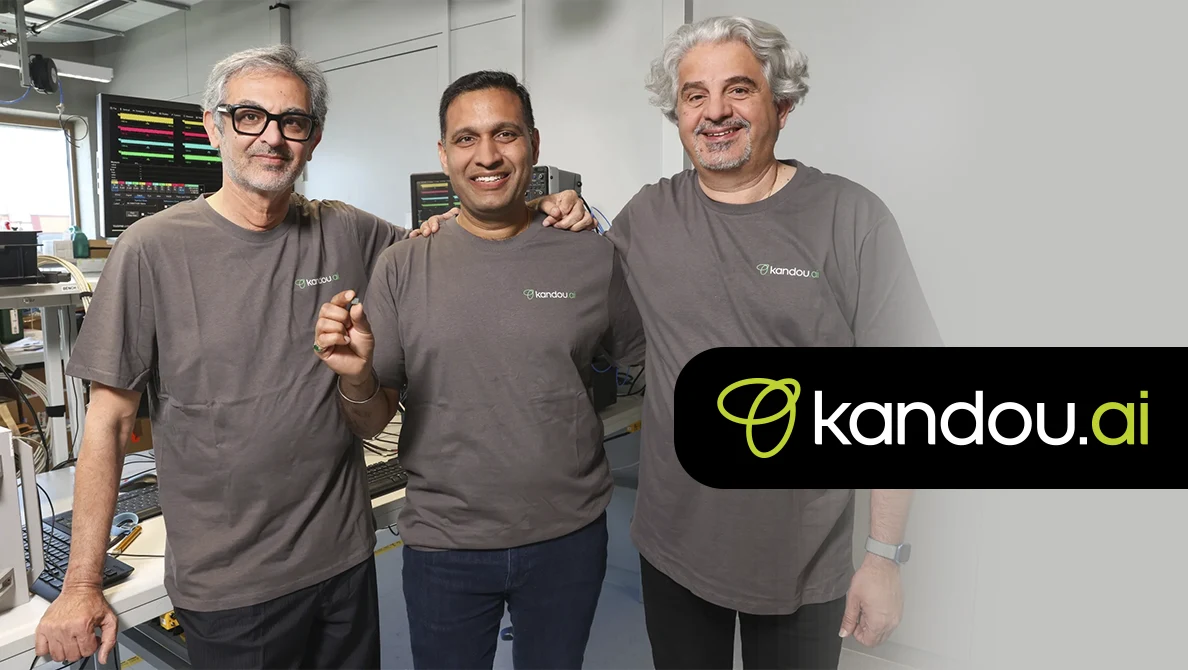
Kandou AI Inc., a developer of copper-based interconnects for artificial intelligence chips, has raised $225 million in funding.
Bloomberg reported today that the investment values the company at $400 million. The round was backed by Synopsys Inc. and Cadence Design Systems Inc., two publicly traded providers of chip development software. They were joined by semiconductor designer AIchip Technologies Ltd., SoftBank Group PBC and semiconductor-focused fund Maverick Silicon.
The graphics processing units in an AI cluster regularly exchange data with one another to coordinate their work. Usually, GPUs transmit traffic via fiber optic cables. Kandou AI is developing a copper-based alternative that it says is considerably more cost-efficient.
The company also offers another copper-based interconnect, Glasswing, that can be used to link together a chip’s components. Many modern processors comprise multiple computing and memory modules that are each implemented on a separate die. According to Kandou AI, Glasswing can move data between those modules faster and using less memory than competing technologies.
Glasswing is powered by a data transmission technology called CNRZ-5 Chord. It implements a proprietary variation of a networking approach known as differential signaling.
Differential signaling works by encoding each piece of data into two electrical signals with different voltages. Those electrical signals travel to the target system via 2 separate wires. The system decodes the data the signals contain by measuring the difference between their voltages.
CNRZ-5 Chord, the technology that underpins Glasswing, uses six wires to transmit data instead of the usual two. It can send up to five bits at once over those links using half the power required by competing technologies. Furthermore, Kandou AI says that CRNZ-5 can transmit data over longer distances, which gives chip designers more flexibility in how they design processors.
The company claims that its technology makes it possible to shrink a multi-die processor’s main chiplet. It also removes the need for an interposer, a component often used to move data between chiplets. Those changes reduce the complexity of processors designs, which makes them easier to produce and thereby reduces manufacturing defects.
Kandou AI reportedly started prioritising the AI infrastructure market after Chief Executive Srujan Linga joined last year. The Swiss company earlier focused on making components for connected devices such as industrial computers. The products that it offers in that market help improve the reliability of USB and PCIe links. Additionally, it sells a switch that connected devices can use to exchange data with peripherals.
The company offers its data centre and consumer products alongside an interconnect diagnostics application. Engineers can use the software to test the reliability of the network links they build using the company’s hardware.