
Google I/O 2026: Big AI Announcements Ahead

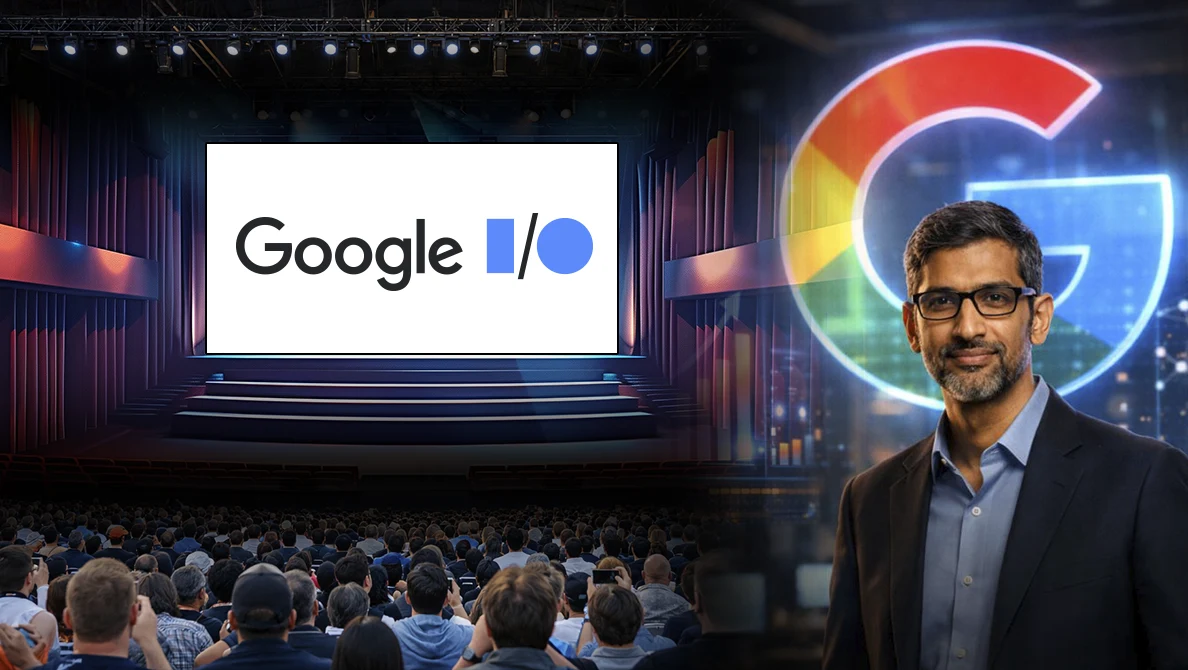
Google has locked in the dates for its flagship developer conference, Google I/O 2026, and the company is already signaling what the headline theme will be: AI, everywhere. The event runs May 19–20, 2026, taking place at the Shoreline Amphitheatre in Mountain View, California, with livestreamed keynotes and online sessions available globally.
While Google hasn’t published a full keynote agenda yet, it has teased the direction of travel. In Google’s own “save the date” messaging, the company points to new Gemini updates and “agentic coding”—a hint that developer tools and AI-assisted software building will be front and center.
Why this year’s I/O could matter more than usual
Over the past two years, I/O has shifted from a traditional developer conference into a broader “platform moment,” where Google uses the stage to show how quickly it can ship AI features across Search, Android, Workspace, and Chrome. The 2026 edition looks positioned as another step in that strategy: not just announcing new models, but demonstrating how AI becomes the default interface for Google products.
That framing matters because Google’s competition isn’t limited to one rival. It’s fighting on multiple fronts: AI assistants, coding copilots, search experiences, and device-level AI features. I/O is where Google tends to bundle those threads into a single narrative—and investors, developers, and product teams across the industry treat it as a signal of what’s about to become mainstream.
What’s confirmed so far
Here’s what we know with certainty:
- Dates: May 19–20, 2026
- Format: In-person + online livestreams/sessions
- Theme hints: Gemini updates and agentic coding are explicitly teased
Google’s I/O site is also leaning into playful “Gemini-powered” interactivity (puzzles/mini-games), which—beyond the marketing—reinforces a consistent message: Gemini isn’t a feature; it’s becoming a layer across everything Google does.
What to watch for: likely AI headlines
Beyond what’s already been confirmed, there are a few updates that feel very plausible based on recent coverage and the direction Google’s been taking.
1) Gemini upgrades and tighter integration across products
If there’s one “safe bet” for I/O 2026, it’s a big round of Gemini improvements—possibly new model options, stronger multimodal performance, and a more straightforward path for developers through clearer APIs, tooling, and pricing. Google has already been positioning Gemini as the engine behind experiences across its ecosystem, so I/O is the natural place to show what “next” looks like for performance and adoption.
2) Developer-first “agentic” tooling
Google’s “agentic coding” tease suggests stronger AI assistance inside developer workflows—think coding agents that can plan tasks, refactor, generate tests, and integrate with build pipelines. Even if Google doesn’t label it as a direct competitor to other coding copilots, the direction is clear: AI that does more than autocomplete.
3) Android 17 and the next phase of on-device AI
Android announcements are an I/O staple, and this year is expected to be no different, with reporting pointing to Android 17 as a likely keynote topic. If Google wants to show “AI everywhere,” Android is where that message becomes tangible: on-device features, privacy-preserving experiences, and tighter links between the OS and Gemini.
4) XR, wearables, and the ‘AI interface’ beyond phones
Another area to watch is Android XR—especially if Google uses I/O to position Gemini as the interface layer for mixed reality and wearable computing. Even small updates here can be meaningful, because they hint at how Google imagines search, assistance, and apps working when screens aren’t the center of your day.
How to cover I/O like a news blog (and stand out)
If you’re publishing this as a news post, a simple structure works best:
- A crisp lede with what, when, where
- A “confirmed vs. expected” section (clearly labeled)
- A short “why it matters” paragraph tied to real user impact
- A closing line that points readers to the livestream and your follow-up coverage plan
Google I/O 2026 is still a few months away, but the early signals are strong: Google wants this year’s conference to be a proof point that Gemini isn’t just catching up—it’s becoming the connective tissue across products, devices, and developer workflows.