

Trump Signs Executive Order for Nationwide AI Regulation Framework

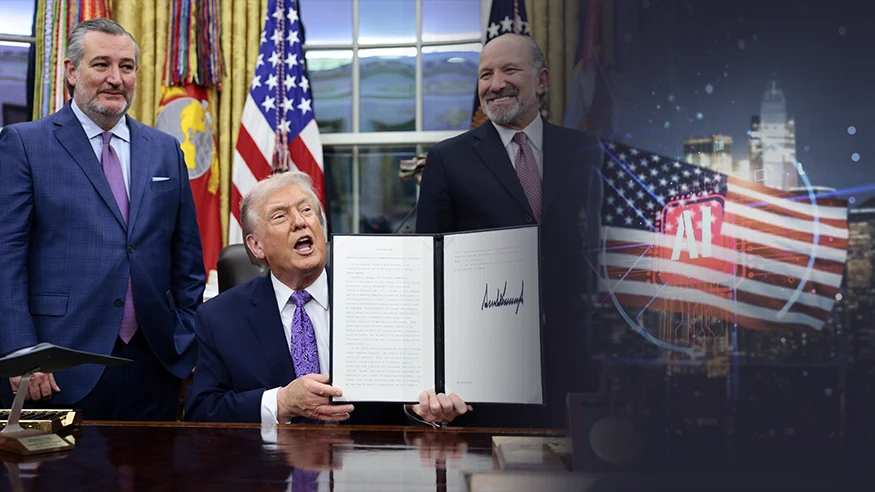
An executive order signed by President Donald Trump on Thursday established one AI regulation archetype at the expense of the authority of individual states.
The order states that to become a winner, the United States AI corporations should have the right to innovate without any clumsy regulation. Yet too much regulation by the State is the bane of this imperative.
With the assistance of the AI, crypto czar David Saks, the Trump administration has been seeking an avenue where the federal regulations are able to preempt the state regulations on AI, a step that would prevent big Democratic-dominated states such as California and New York to have its way over the growing sector.
Sacks and other tech investor and podcaster Chamath Palihapitiya were standing with Trump at the signing in the Oval Office. Sen. Ted Cruz (R-TX) and Commerce Secretary Howard Lutnick were also in attendance.
The step is a victory to technology firms such as OpenAI and Google.
and venture capital firm Andreessen Horowitz that have advocated to implement fewer regulations which they consider too heavy handed. The AI firms have been setting up offices near the Capitol and running campaigns at a super PAC with at least 100 million dollars to use during the midterms in 2026.
Advocates of a federal regulation have contended that having varying regulations in various parts of the nation would prove to be a disadvantage to the U.S. in its quest to compete in the global AI race. A version of a proposed executive order was leaked last month, a solitary federal standard on AI.
An alternate proposal to ban states that regulate AI over a 10-year period was debuted in the Republican spending bill but the ban was removed, and Trump signed the bill in July.
The executive order issued by Trump also requires the attorney general to create an AI Litigation Task Force, the duty of which will be to attack State AI laws.
States that fail to comply with the rules might be restricted in their funding. According to the order within 90 days of the signing, the secretary of commerce should indicate under which circumstances states would be able to get the rest of the funding in the Broadband Equity Access and Deployment or BEAD program, a 42.5 billion initiative to put high-speed access in the rural regions.