
10 Top AI Healthcare Software Companies in the USA (2026)


Key Takeaways:
- The U.S. AI in healthcare market is expected to reach $99.77 billion in 2033, driven by the need for healthcare that is cost-effective and more predictive.
- Generative AI in clinical documentation is the fastest-growing segment, which is directly linked to reducing physicians’ burnout.
- When evaluating an AI healthcare software company in 2026, HIPAA compliance, HL7, or FHIR interoperability are non-negotiable requirements.
- The top AI healthcare software companies specialize in different domains, from radiology to custom software development.
- The measurable ROI of AI in healthcare is visible through time saved on documentation, diagnostic accuracy, operational efficiency, and patient outcomes.
Introduction
Artificial Intelligence in modern healthcare is reshaping how providers are offering care to patients and how patients are perceiving it. From diagnosis to appointment scheduling, AI is contributing to every aspect of the medical field. The global market size of AI in healthcare is expected to reach $505.59 billion by 2033 with an annual growth rate of 38.90%.
As per studies, more than 96% of hospitals in the U.S and over 78% of doctors rely on tools like EHR for managing their patient data. These numbers show the importance of healthcare software that can bring convenience to patients and care providers.
However, it is not easy to find the right partner to implement AI healthcare solutions, as hundreds of companies are offering these services today. That’s why we have prepared this guide with the top AI healthcare software companies that stand out for their ratings and what makes them industry leaders.
How We Selected the Top AI Healthcare Software Companies
According to a study published in Frontiers Digital Health, successful implementation of AI in healthcare depends on three pillars:
- Legal compliance
- Technological strength
- Impact on clinical outcomes and financial performance.
Based on this research and our own understanding, we realized that not all companies are up to the mark when it comes to AI healthcare software development. That’s why we focused on companies that have real experience in working in clinical environments. These are the main aspects we kept in mind while evaluating AI partners.
1. Innovation and AI capabilities:
We evaluated top AI healthcare software development companies based on their level of AI expertise and how innovative they are in solving a care provider’s problems.
That’s why we analyzed how they use machine learning and multimodal AI models that are capable of processing images and data simultaneously. We assessed whether the companies are leveraging modern AI frameworks and cloud technology for smooth integration with EHR systems.
2. US healthcare market presence:
We curated a list of top AI healthcare software providers who have a strong footprint in the US, and there is a reason behind why we did so. It’s not wrong to partner with a company outside the U.S., but working with them involves a few risks for providers.
Healthcare in the U.S. is highly regulated and expensive when compared to other countries. Companies in the U.S. already understand the U.S. healthcare system and are aware of the insurance-based care model followed here.
If the vendor doesn’t understand the importance of HIPAA or hasn’t partnered with U.S. health systems, then the software implementation will lead to risks. That’s why we went with providers whose headquarters are based in the U.S.
3. Clinical impact & measurable outcomes:
Implementing AI in healthcare is very different compared to other industries. Healthcare decisions are going to affect the lives of patients. The impact of technology in healthcare is only seen through evidence and outcomes. For example, the outcome of AI-driven personalization is reduced readmissions.
That’s why we prioritized companies that have documented case-studies and whose AI healthcare solutions has improvement in patient outcomes.
4. Compliance and security:
In healthcare, security and compliance are fundamental requirements. The first thing we evaluate about a firm is whether they have embedded security frameworks in its architecture or not. Because frameworks like HIPAA, SOC2, and GDPR ensure that data is secure from the beginning.
We also prioritized companies whose algorithms are clinically validated and safe to deploy in hospital environments. We disqualified companies that didn’t have certifications and didn’t align with security management practices.
5. Interoperability:
While evaluating top AI healthcare software providers, interoperability was another factor we considered. In particular, we checked for software vendors whose tools are easy to integrate with EHR systems such as EPIC and who adhere to standards such as HL7 and FHIR for data exchange.
Top AI Healthcare Software Companies in the USA (2026)
These 10 firms in the United States focus on providing AI healthcare software that improves care quality and helps physicians diagnose faster.
1. The NineHertz:
The NineHertz is one of the top AI healthcare software development companies in the USA, and it was established in 2008. They develop full-cycle healthcare software solutions that are compliant with HIPAA. The NineHertz builds tools for hospitals and healthtech startups, such as remote patient monitoring tools, AI-powered clinical decision support tools, and patient engagement portals.
The NineHertz’s AI-integrated healthcare solutions bring features like image recognition, predictive analytics, AI chatbots, and more that help in providing better patient care. They offer the best AI healthcare software that enables healthcare institutions of all sizes and niches to automate their workflow and elevate operational processes.
With more than 15 years of experience, The NineHertz has collaborated with healthcare institutions globally to help them build smart solutions from scratch.
| Criteria | Details |
|---|---|
| Min. Project Size | $25,000+ |
| Hourly Rate | $50–$99 |
| Employees | 250+ |
| Location | United States |
| Website | https://www.theninehertz.com |
Why they made it to the list: The NineHertz can develop a simple healthtech idea into a fully deployable software. Their transparent pricing system and their ability to build tools that can integrate smoothly with major EHRs like EPIC and Cerner. Their mission is to supercharge healthcare providers’ tech initiatives by providing solutions that meet their requirements.
2. CleverDev Software:
CleverDev Software is a Texas-based AI healthcare software development company that builds IT solutions to enhance patient engagement and simplify clinical workflows. They are known for combining healthcare domain knowledge with their technical expertise. This company offers healthcare software solutions like EHR systems and Remote Patient Monitoring systems.
| Criteria | Details |
|---|---|
| Min. Project Size | $25,000+ |
| Hourly Rate | $25 – $49 |
| Employees | 200 |
| Location | United States |
| Website | cleverdevsoftware.com |
Why they made it to the list: CleverDev Software creates applications that are compliant and business-driven. They claim that they develop software applications with a compliance-first mindset. For U.S. healthcare organizations that cannot afford gaps in compliance, CleverDev could be a reliable partner.
3. Glorywebs:
Glorywebs is one of the top AI healthcare software development companies that creates customized software for clinics, hospitals, and telemedicine platforms. They have a track record of developing software that is both functional and compliant. Glorywebs is located in Pennsylvania and develops solutions like AI-driven decision-making tools, appointment scheduling systems, and telehealth platforms.
| Criteria | Details |
|---|---|
| Min. Project Size | $10,000+ |
| Hourly Rate | $25 – $49 |
| Employees | 100+ |
| Location | United States |
| Website | glorywebs.com |
Why they made it to the list: Gloriawebs stands out because of their user-friendly software that improves patient experience and reduces overload on the admin team. They have proven expertise in the healthcare sector, and their solutions are compliant with HIPAA and HL7. For small and mid-sized healthcare providers, Gloriawebs delivers value with its cost-effective solutions.
They adhere to HL7, HIPAA, and other standards, improving efficiency and decision-making.
4. Quantiphi:
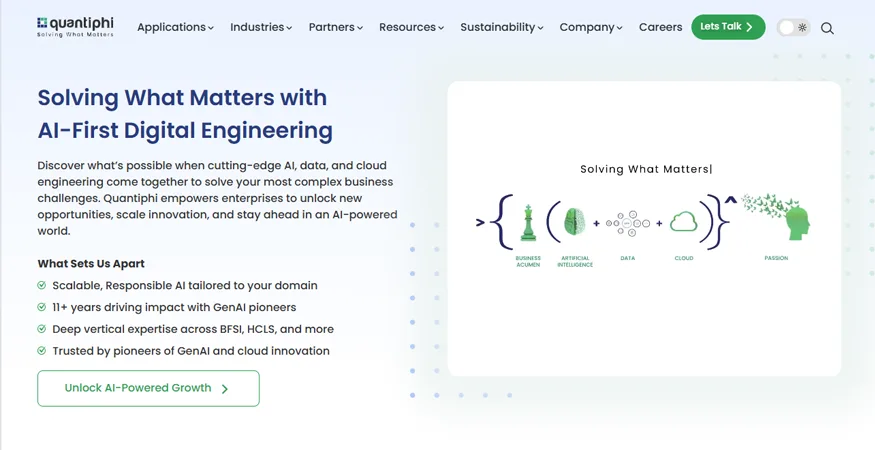
Quantiphi is an AI and data science company that mainly focuses on solutions for medical imaging and patient data analytics. They use cloud native architecture and follow regulatory compliance.
Quantiphi helps U.S. health systems and pharmaceutical companies make smarter decisions with their AI-first policy.
| Criteria | Details |
|---|---|
| Min. Project Size | $50,000+ |
| Hourly Rate | $50 – $99 |
| Employees | 3500+ |
| Location | United States |
| Website | quantiphi.com |
Why they made it to the list: They have partnerships with AWS and Google Cloud. So Quantiphi can drive enterprise-level innovation, and that’s something unique about them.
5. DataArt:
DataArt is one of the leading AI healthcare software development companies with a 25-year track record. They build custom AI solutions for digital health platforms and pharmaceutical companies.
With their experience and skilled healthcare domain specialists, DataArt builds solutions that are secure and user-friendly.
| Criteria | Details |
|---|---|
| Min. Project Size | $100,000+ |
| Hourly Rate | $50 – $99 |
| Employees | 5700+ |
| Location | United States |
| Website | dataart.com |
Why they made it to the top: DataArt develops healthcare solutions that are scalable and modern. They develop solutions that are compliant with HIPAA and SOC2. DataArt is a trusted partner for organizations with complex technical challenges.
6. CaliberFocus:
If you are looking for an AI-first company that develops healthcare software, then CaliberFocus could be the right choice for you. They enhance patient care systems and improve diagnostics using Gen AI and predictive analysis.
| Criteria | Details |
|---|---|
| Min. Project Size | $10,000+ |
| Hourly Rate | $25 – $49 |
| Employees | 50+ |
| Location | United States |
| Website | https://caliberfocus.com/ |
Why they made it onto the list: CaliberFocus’s case studies show their expertise, and they build solutions where access controls and audit trails are built into the foundation.
7. Empeek:
Empeek is a leading AI healthcare software company who build AI platforms with top-tier quality. They create innovative AI healthcare solutions that are like EMR and telemedicine systems, compliant with HIPAA or HITECH. Empeek’s dedicated team has simplified operations for 50+ healthcare providers.
| Criteria | Details |
|---|---|
| Min. Project Size | $25,000+ |
| Hourly Rate | $25 – $49 |
| Employees | 100+ |
| Location | United States |
| Website | empeek.com |
Why they made it on the list: According to their documented case studies, they have saved $1.07 million annually for one of their enterprise clients. They deliver products ranging from IoT patient monitoring devices to AI systems that detect emergency health conditions, providing real value to the care providers and life-saving to the patients.
8. SPSoft:
SPSoft is an AI healthcare software development company that excels in building custom EHR and EMR systems. They prepare FDA documentation and follow standards ike SOC2 and HITRUST.
| Criteria | Details |
|---|---|
| Min. Project Size | $25,000+ |
| Hourly Rate | $50 – $99 |
| Employees | 100+ |
| Location | United States |
| Website | spsoft.com |
Why they made it on the list: SPSoft has dedicated healthcare experts to understand clinical workflows. They bring FHIR interoperability expertise and EHR integration experience that make them valuable for organizations.
9. Orangesoft:
Orangesoft is a California-based AI healthcare software development company that builds healthcare applications compliant with HIPAA. They develop AI healthcare solutions like mental health apps and clinical decision support tools that are clinically regulated.
| Criteria | Details |
|---|---|
| Min. Project Size | $25,000+ |
| Hourly Rate | $50 – $99 |
| Employees | 200 |
| Location | United States |
| Website | https://orangesoft.co/ |
Why they made it to the list: Orangesoft’s expertise in FDA or Software as a Medical Device development makes them a strong partner for MedTech companies.
10. Tateeda Global:
Tateeda Global is one of the leading AI healthcare software development companies in California. They understand the operational realities of hospitals, along with their technical requirements.
| Criteria | Details |
|---|---|
| Min. Project Size | $25,000+ |
| Hourly Rate | $50 – $99 |
| Employees | 100+ |
| Location | United States |
| Website | tateeda.com |
Why they made it to the list: Tateeda Global’s documented case studies show 25% reduction in operational drag. They have partnered with major companies like AYA Healthcare and Abbott.
Comparative Overview of the Top AI Healthcare Companies
There are so many companies that are specialized across different niches. This table will help you identify the right partner for your healthcare organization.
| Company | Founded | Primary AI Focus |
|---|---|---|
| The NineHertz | 2008 | Custom AI development for hospitals, clinics, and healthtech companies |
| CleverDev Software | 2020 | Compliance first AI developer |
| Glorywebs | 2012 | Custom healthcare software |
| Quantiphi | 2013 | AI-first data science and ML |
| CaliberFocus | 2017 | AI analytics and RCM |
| Orangesoft | 2011 | Custom AI and SaMD development |
| Empeek | 2015 | AI-powered clinical tools and mobile health applications |
| SPSoft | 2017 | Custom AI and EHIR/FHIR development |
| DataArt | 1997 | Enterprise health data engineering |
| Tateeda Global | 2013 | Custom AI development |
Key Trends in AI Healthcare Software for 2026
The healthcare industry is rapidly changing, particularly with AI at the forefront. It is easy to find a platform or tool that solves a problem today. However, you have to find a solution that is relevant even in 5 years from now. That is why it is important to know the key trends in the AI healthcare industry to make the right investment decisions.
Generative AI in Clinical Documentation:
Clinical documentation takes a large proportion of a physician’s time. If a doctor spends 1 hour interacting with patients, they have 2 hours of documentation work. This leads to burnout and increased errors in the documentation process.
That’s where Generative AI steps in. Instead of doing a simple transcription, it uses large language models to understand the clinical context and summarize the clinical conversation between patients and doctors. This AI tool can differentiate symptoms and treatment plans and organize them as clinical notes with a standard format. Generative AI in clinical documentation helps physicians spend more time with patients, improving care quality.
Clinicians can save 2 to 3 hours a day with this platform, and it also helps increase job satisfaction. Many leading AI healthcare software development companies offer clinical documentation tools that can reduce burnout of physicians and lower recruitment costs.
AI-Driven Diagnostics & Imaging:
AI diagnostics is a major turning point in the history of healthcare, moving from reactive to preventive and predictive care. Using machine learning and deep neural networks, AI tools can analyze high-volume clinical data. It can then provide a customized treatment plan based on the patient’s genetics and lifestyle.
AI imaging tools can detect abnormalities in scans or reports that a human eye may miss. These tools are particularly useful in identifying early-stage cancer and stroke signs. Many top AI healthcare software companies can develop tools that help in tracking brain tumors and cancers to decide the best treatment method.
Predictive Analytics for Population Health:
Health systems and care providers are deploying AI-powered predictive analytics to identify high-risk patients. Public health predictive tools can predict disease outbreaks. For example, organizations can plan vaccination campaigns based on flu peak weeks with predictive AI tools.
These tools also help providers in identifying patients with serious health concerns and initiating preventive care for them. Predictive analytics also help in optimizing hospital operations, such as managing bed availability and staff scheduling.
AI healthcare software companies can develop algorithms that are capable of identifying patients who are at high risk of readmission. This feature will help clinicians to adjust the patient’s post hospitalization treatment plan.
Automation in Hospital Operations:
In 2024, 71% of hospitals in the U.S. have integrated A.I with their EHR systems. It can automate administrative tasks such as billing and appointment scheduling. Healthcare organizations can use automation to gain back focus on patient care instead of asking physicians to do paperwork.
Already 80% of healthcare providers feel that administrative work is interfering with patient care, leading to less job satisfaction. That’s why automation in hospital operations improves operational efficiency and allows clinicians to focus on enhancing care quality.
Frequently Asked Questions
1. What are the top AI healthcare software companies in the USA?
The top AI healthcare software companies in the USA are The NineHertz, CleverDev Software, Glorywebs, Quantiphi, CaliberFocus, Empeek, DataArt, SPSoft, Tateeda Global, and Oragnesoft. Each of them leads with their unique strengths and capabilities. The right choice for your organization depends on your budget and tech infrastructure.
2. How do AI healthcare software companies improve patient outcomes?
AI healthcare software improves patient outcomes through various mechanisms. Predictive analysis is used to identify high-risk patients before their conditions become worse. This technology enables preventive intervention that reduces hospitalizations of patients. Ambient AI documentation helps physicians to reduce the time taken to create clinical notes and improve patient engagement. When all these capabilities come together, patient care shifts from being reactive to proactive.
3. What should hospitals look for when choosing an AI healthcare software provider?
Hospitals should validate an AI healthcare software company across various dimensions. You have to ensure whether their AI algorithm has FDA clearance or honest reviews from peers proving its efficiency. Check whether their tools can be integrated with EHR systems like Epic. It is essential to know whether their software is HIPAA compliant. Choose a vendor who provides support after implementation and provides onboarding and training support.
4. Are AI healthcare software solutions HIPAA compliant?
Yes. It is mandatory that all AI healthcare software development companies operating in the US comply with HIPAA. Compliance means implementing physical safeguards like secure servers, administrative safeguards like policies and access control, and technical safeguards like encryption to protect PHI (Protected Health Information).
5. How much does AI healthcare software development cost in the US?
The cost of AI healthcare software development depends on the scope of your project, complexity, and the development partner you choose. For a focused solution, custom AI healthcare software development costs between $25000 and $50000. It might cost more than $200000 for an enterprise-scale platform with complete integration. Custom development partners like The NineHertz, CleverDev, and Glorywebs offer hourly rates starting from $25 to $50, making them cost-effective and building solutions that bring measurable value to your organization.
Conclusion:
AI in healthcare is no longer experimental and is behind many of the transformations we see today. Today, you can find them in everyday clinical operations like patient scheduling and documentation. Choosing an AI healthcare software development company in the USA that fulfills your organization’s requirements needs clarity.
The AI healthcare software companies mentioned here show how AI is gearing up for a major shift in the medical field. As more companies emerge, selecting the right partner for your healthcare organization depends on ensuring compliance and being aware of how much the technology is aligned with your goals.
Get in Touch with
AI Experts
Kapil Kumar is a leading voice in the field of Artificial Intelligence, blending deep technical expertise with a passion for innovation and real-world impact. As an accomplished author, researcher, and AI practitioner, he brings clarity to complex technologies—making AI not only understandable, but actionable. Whether decoding algorithms or envisioning ethical frameworks for AI, he is committed to guiding professionals, students, and tech enthusiasts through the rapidly evolving world of artificial intelligence.