

Accenture Rolls Out Microsoft Copilot to 743,000 Employees

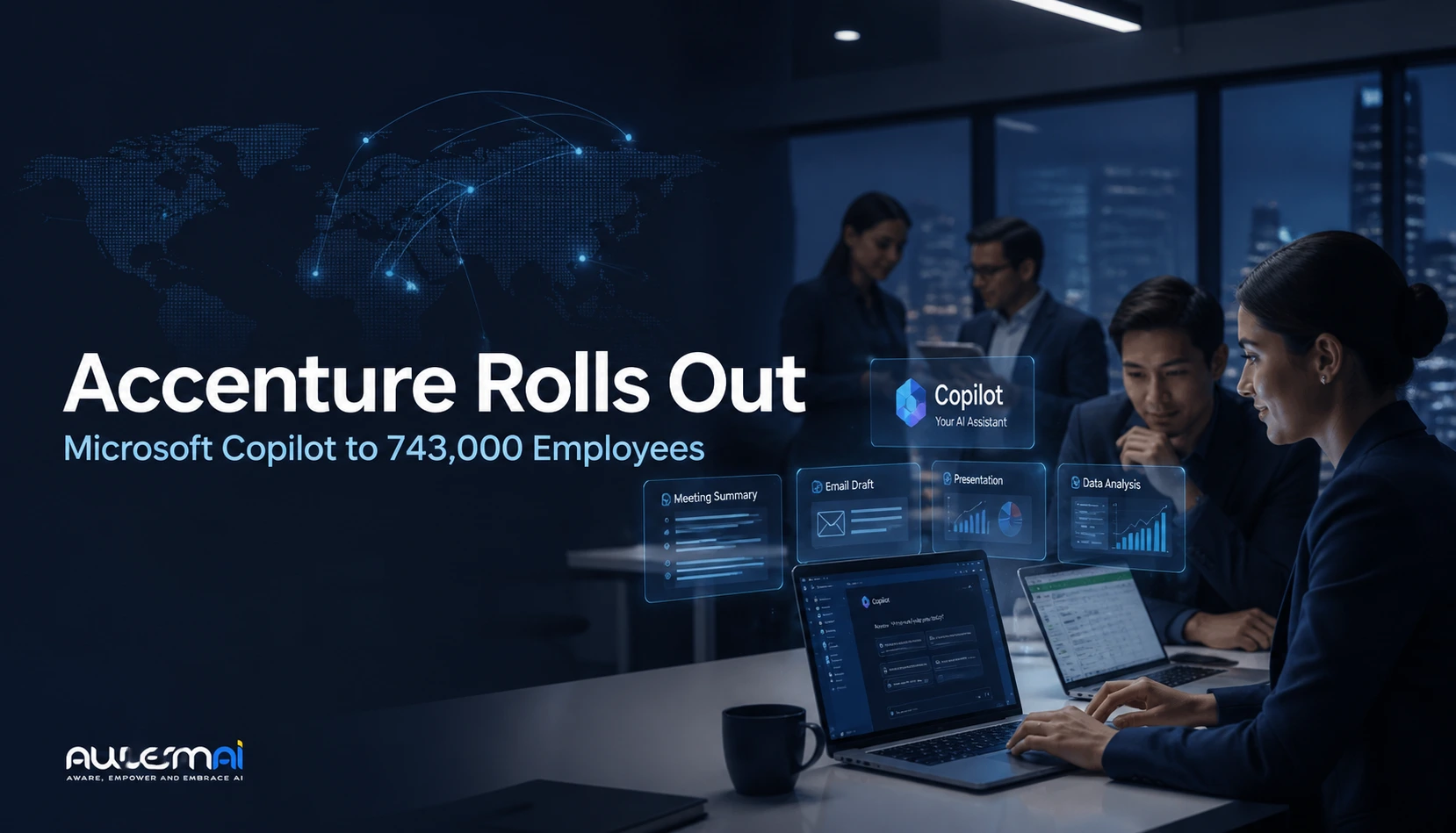
Accenture is bringing Microsoft 365 Copilot to its global workforce of around 743,000 employees, in what has become one of the biggest enterprise AI rollouts so far. The move shows how quickly generative AI is becoming part of everyday office work, especially inside large consulting and technology companies.
For Accenture, this is not just about giving employees access to another digital tool. Copilot will be available inside Microsoft 365 apps such as Teams, Outlook, Word, Excel, and PowerPoint, meaning employees can use it while working on emails, meetings, documents, spreadsheets, and presentations.
The scale of this rollout is what makes it important. Accenture is not testing Copilot with a small team or a single department. It is giving the tool to a workforce spread across markets, roles, and client projects. At that size, even simple use cases like drafting emails, summarizing meetings, preparing notes, or reviewing documents can create a noticeable impact on how teams manage their day-to-day work.
Microsoft has positioned Copilot as a core part of its enterprise AI strategy. The company wants businesses to see AI not as a separate chatbot, but as a built-in assistant inside the tools employees already use daily. Accenture’s adoption gives Microsoft a major enterprise example at a time when many companies are still deciding how deeply they want to invest in workplace AI.
Why This Rollout Matters
Many businesses have tested generative AI over the past two years, but large-scale adoption has been slower than the early hype suggested. Companies have had to deal with practical questions around cost, employee training, data security, accuracy, governance, and return on investment.
That is why Accenture’s decision is important. A company of this size will not roll out an AI tool globally unless it believes there is a clear business case. The deployment signals that AI assistants are starting to move beyond limited pilots and into normal business operations.
For employees, Copilot can support many routine tasks that usually take up a large part of the workday. It can help summarize meetings, create first drafts from notes, prepare presentation outlines, sort through long email conversations, and make spreadsheet work easier.These use cases may not sound dramatic, but they target the kind of routine work that takes up a large part of the day in enterprise environments.
At the same time, the success of the rollout will depend on how well Accenture trains its teams. AI tools do not automatically create value just because they are available. Employees need to know when to use them, when not to use them, and how to review the output properly.
A Bigger Signal for Enterprise AI
The Accenture rollout also says something about the direction of enterprise AI in 2026. Businesses are no longer only asking what generative AI can do. They are now asking how to make it useful across departments, teams, and workflows.
This shift is important for the broader technology market. AI adoption is moving from experimentation to implementation. Companies want tools that can improve productivity without forcing employees to change their entire way of working. That is one reason Copilot has gained attention: it sits inside platforms many companies already use.
Still, large AI deployments come with responsibility. But a rollout of this size also needs careful control. Accenture and other large enterprises will also need clear rules for using AI in daily work. Employees must know what type of information can be shared with Copilot, how outputs should be reviewed, and where human approval is still required. The tool can help teams move faster, but final responsibility for accuracy, quality, and business decisions remains with people.
For Microsoft, Accenture’s adoption gives Copilot more credibility as an enterprise AI solution.For other companies, it shows that workplace AI is moving from small experiments into real business environments.
Accenture’s decision to bring Microsoft Copilot to 743,000 employees reflects a larger shift in the market. Generative AI is no longer being treated only as an innovation project or a side experiment. It is becoming part of the everyday workplace, and the real test now is whether companies can turn that access into practical, measurable value.