

AI.com Acquired for $70 Million in Historic Deal

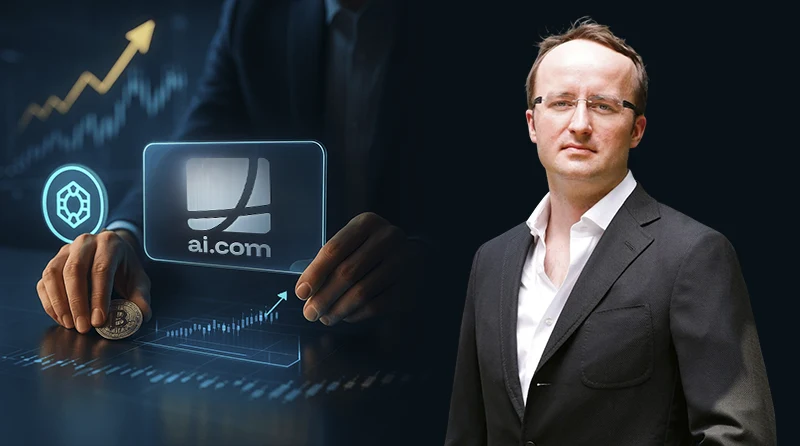
A two-letter domain name just changed hands for a price that would buy a small fleet of billboards in every major U.S. city—combined. According to reporting from the Financial Times, AI.com was acquired for roughly $70 million, a figure described as the largest publicly disclosed domain sale on record.
The buyer: Kris Marszalek, co-founder and CEO of Crypto.com, a brand already known for big-stage marketing. And the timing wasn’t subtle. Multiple outlets report the domain is expected to be unveiled with a Super Bowl ad push, turning what’s normally a quiet asset transfer into a mass-market announcement.
Why a two-letter domain can be worth $70 million?
If you’ve spent time around tech, you know the rule: distribution beats novelty. Products come and go; attention has a longer half-life. A domain like AI.com is essentially a front door to the most contested category in modern computing—and unlike an app store ranking or a social platform algorithm, it’s an owned asset.
The Financial Times report says the transaction was brokered by Larry Fischer of GetYourDomain.com and paid entirely in cryptocurrency, with the seller not publicly identified. That alone makes the deal unusual: it’s not just a record domain purchase, but a high-profile signal that crypto wealth is still moving into marquee “real estate” on the open internet.
There’s also the simple reality of scarcity. Two-letter .com domains are effectively gone, and those tied to dominant categories—like “AI”—are in a class of their own. Fischer’s framing to the FT was blunt: for assets like AI.com, “there are no substitutes.”
And the record angle matters. One Malaysia-based report notes the price exceeds past benchmark deals such as CarInsurance.com’s $49.7 million sale (2010), which has long been cited as one of the largest publicly reported domain purchases.
What AI.com is being positioned to become?
This isn’t being treated as a trophy domain that redirects to someone else’s product. The Financial Times reports Marszalek plans to use AI.com to promote a consumer-facing “personal AI agent” concept—tools that can help users do practical tasks such as sending messages, using apps, and even trading stocks.
TechCrunch, citing the FT reporting, frames the move as a category bet: a rare domain purchase that’s meant to launch something, not merely sit in a portfolio. Forbes similarly describes the acquisition as a high-dollar wager on the rise of AI agents and consumer AI experiences.
Whether AI.com becomes a genuine product destination or a high-visibility brand funnel, the playbook is clear:
-
Own the category keyword people type when they don’t know what else to search.
-
Remove friction for first-time users (“Just go to AI.com”).
-
Build trust through simplicity—a clean, memorable entry point in a market full of confusing tool names.
In a world where AI startups compete on features that often converge within months, the domain itself becomes a form of defensible positioning.