
Infosys Partners With Anthropic to Launch Enterprise AI Agents

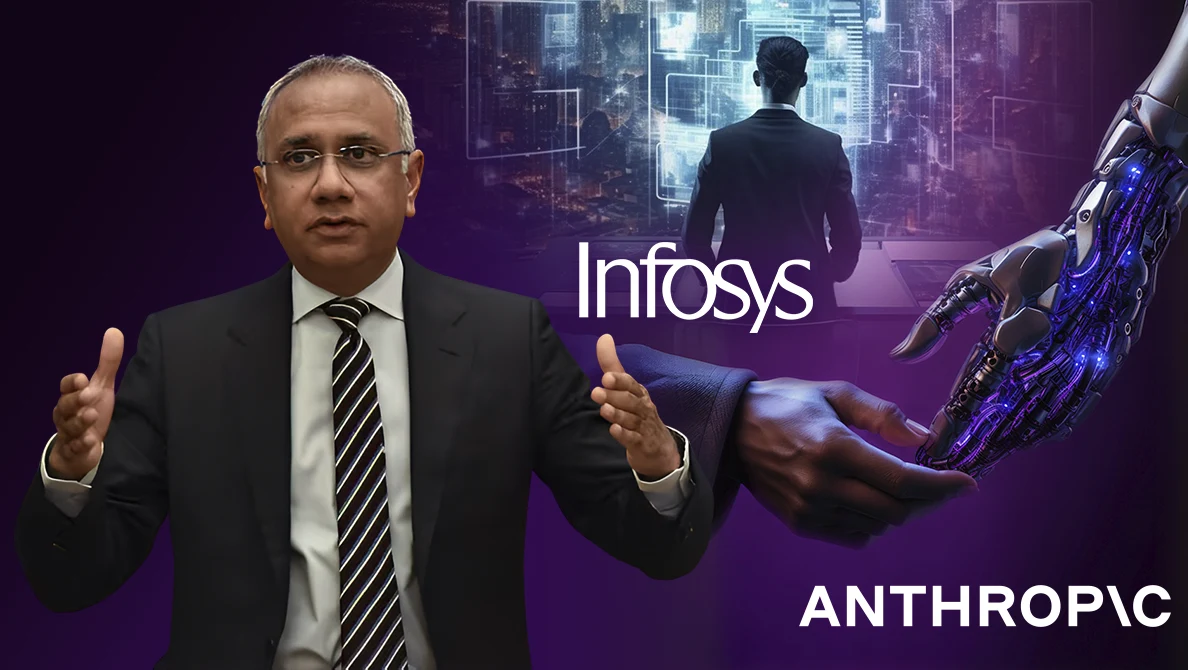
Infosys has announced a new strategic collaboration with Anthropic that aims to take “AI agents” from demo-mode into real, complex enterprise work—starting with telecommunications and expanding into other regulation-heavy sectors. The partnership combines Anthropic’s Claude models (including Claude Code) with Infosys Topaz, Infosys’ AI offerings, to build agentic systems that can handle multi-step workflows with the governance and transparency large enterprises require.
Why this partnership is getting attention
The timing matters. Indian IT services stocks have faced fresh investor anxiety over whether advanced AI tools will disrupt traditional outsourcing and services revenue. Against that backdrop, Infosys’ announcement read like a counter-narrative: AI isn’t just a threat to services firms—it’s also a platform shift they can productize and deliver at scale. Reuters reported that Infosys shares rose after the news, and highlighted the broader debate on how quickly AI will reshape IT services business models.
At the heart of the collaboration is a practical promise: move beyond chatbots that answer questions, and toward AI agents that can complete tasks—persistently, across long processes, and in environments where compliance and auditability are non-negotiable.
What “enterprise AI agents” actually means here
In plain terms, Infosys and Anthropic are focusing on “agentic AI”—systems designed to execute multi-step work such as processing claims, generating and testing code, or managing compliance reviews. The announcement specifically calls out the use of tools like the Claude Agent SDK to help enterprises build agents that can operate across complex workflows instead of one-off interactions.
They’re also positioning these agents as a lever for a pain point most enterprises recognize immediately: legacy modernization. The collaboration notes that combining Topaz and Claude can help accelerate migrations and reduce the cost of updating aging infrastructure—exactly the kind of slow, high-risk work enterprises want to modernize without breaking what already works.
Why telecom is the starting point
The partnership launches with telecommunications, including a dedicated Anthropic Center of Excellence to build and deploy agents tailored to telecom operations. That’s a telling choice. Telecom is operationally complex, highly regulated, and data-heavy—an ideal proving ground for agentic systems that need reliability, strong controls, and deep domain context.
Infosys says telecom-focused agents will support work like modernizing network operations, streamlining customer lifecycle management, and improving service delivery. If these agents can deliver measurable improvements in a sector like telecom, it becomes easier to expand the same operating model into adjacent industries.
Expansion targets: finance, manufacturing, and software delivery
Beyond telecom, the rollout expands into:
- Financial services: agents for faster risk detection and assessment, automated compliance reporting, and more personalized customer interactions.
- Manufacturing and engineering: using Claude to accelerate product design and simulation to reduce R&D timelines and increase iteration speed.
- Software development: leveraging Claude Code to write, test, and debug code—helping teams move faster from design to production. Infosys also notes it is already deploying Claude Code internally within its engineering organization to build playbooks that can translate into client delivery.
Anthropic’s own post adds another angle: “Claude Cowork” is positioned as part of how teams can automate routine enterprise work like summarization, status reporting, and review cycles—less glamorous than “AI transformation,” but often where adoption starts.
The bigger signal for enterprise AI in India
This announcement also lands as Anthropic deepens its India presence. Reporting around the partnership noted that Anthropic opened an office in Bengaluru around the same time, underscoring a push to work more directly with local enterprises and the IT services ecosystem that supports global transformation work.
Bottom line
If you strip away the buzzwords, the story is straightforward: Infosys is betting that the next wave of enterprise value won’t come from “AI features,” but from AI co-workers and agents that can safely run real business processes—especially in industries where mistakes are expensive and regulations are strict.
For enterprise buyers, the important question will be measurable outcomes: reduced cycle time, lower operational cost, fewer compliance bottlenecks, and faster delivery. For IT services firms, the question is just as real: who can package agentic AI into repeatable, governed solutions—and sell it at scale.