

Japan Moves Toward Digital Independence with Sovereign AI Servers

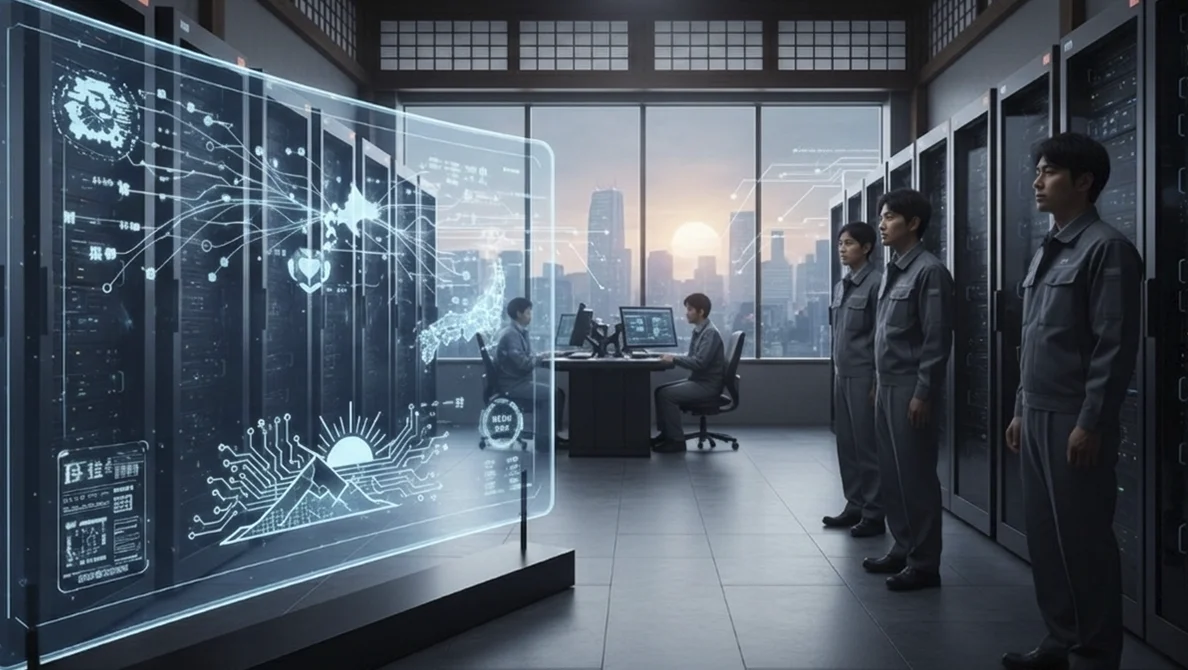
Japan is taking another important step in the global AI race, and this time the focus is not just speed or scale. It is controlled.
As governments and companies around the world rethink who owns the infrastructure behind artificial intelligence, Japan is moving toward a more self-reliant digital future through sovereign AI servers and domestic data center expansion. The shift reflects a growing belief that AI is no longer just a software issue. It is now tied to national resilience, economic security, and long-term technological independence.
Why Sovereign AI Infrastructure Matters
Recent developments point in that direction clearly. Reuters reported that Japan is preparing what could become its largest data center hub in Toyama prefecture, a project designed to support soaring demand for AI-related services. The proposed Nanto Campus is expected to eventually reach 3.1 gigawatts of total power capacity, making it one of the largest data center clusters in the world. Its first phase alone would support about 400 megawatts and is targeted to be ready by the end of 2028.
This is more than a real estate or infrastructure story. It reflects a broader strategy to reduce dependence on concentrated digital infrastructure in Tokyo and Osaka, which currently account for about 85% of Japan’s data centers. Officials have identified regional diversification as a priority, both to ease bottlenecks and to improve resilience in a country where disaster planning is always part of long-term infrastructure decisions. Toyama, positioned roughly 250 kilometers from both Tokyo and Osaka, is seen as a lower-hazard location that could support this next chapter of growth.
The idea behind sovereign AI is straightforward but powerful: countries want AI systems, computing power, and sensitive data to remain under their own jurisdiction, or at least within environments they can govern more directly. That does not necessarily mean cutting ties with global cloud providers. In fact, the Toyama site could serve hyperscale operators such as Amazon, Microsoft, and Google. But it does suggest Japan wants stronger control over where AI workloads run and how critical digital assets are distributed.
Japan’s Push for Long-Term Digital Independence
There is also a major economic reason behind the push. Japan’s data center market is forecast by IDC Japan to nearly double to more than 5 trillion yen by 2028, driven by cloud usage and AI services. The government sees this sector as one lever for attracting more foreign investment while also strengthening domestic digital capacity. In other words, sovereign AI infrastructure is being framed not only as a security measure, but as an economic growth engine.
This conversation is happening well beyond Japan. Reuters reported in January that Amazon launched a Europe-based cloud service aimed at addressing concerns over data security and user control, showing that questions around sovereignty are becoming central to cloud and AI strategy in multiple regions. Japan’s move fits into that wider pattern, but with its own local priorities: resilience, energy access, and a desire to compete without becoming overly dependent on foreign-controlled digital systems.
Still, the road ahead is not simple. Large-scale AI infrastructure requires enormous amounts of electricity, long-term planning, and coordination between government, utilities, and private developers. Reuters noted that western Japan’s more abundant and generally cheaper power supply is one reason Toyama is being considered attractive for future growth. That energy advantage may prove just as important as the server technology itself.
What Japan is building is not just another data center cluster. It is part of a larger attempt to define what digital independence looks like in the AI era. As demand for compute power rises and concerns around control deepen, sovereign AI servers may become less of a niche policy idea and more of a national necessity. Japan appears determined to be early in that transition.