
How to Choose an AI Solution for Healthcare Operations?

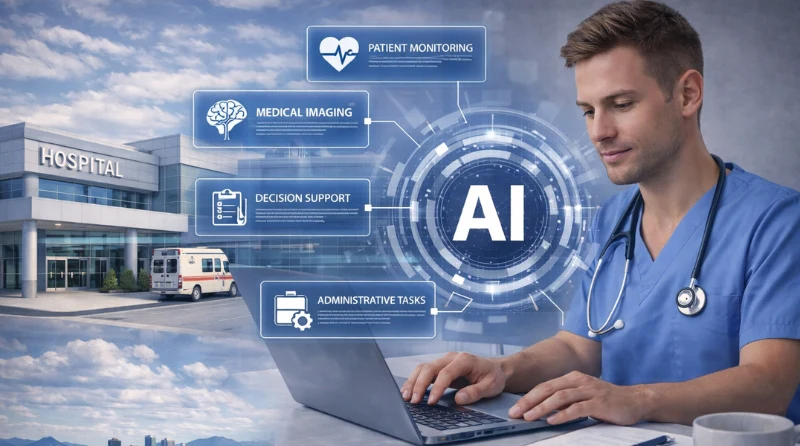
Choosing an AI solution for healthcare operations is one of the most tedious yet crucial parts, as inaccurate decisions can lead to risks to the lives and health of patients. The best way to choose the right AI solution is to assess current needs and use cases within the healthcare institution, then evaluate technologies that could provide the right solution for those use cases, and build a solution using the relevant technology stack. Choosing the right AI development company or vendor is also one of the most important parts, helping medical facilities recognize their requirements and provide consultation on choosing and implementing the right solution.
Artificial intelligence has changed the way businesses connect to their target audience, curate content, sell products, and grow sustainably. Since the emergence of generative AI tools like ChatGPT and Dall-E, AI technology has come a long way. Just like any industry, including manufacturing, retail, entertainment, and education, healthcare has also managed to take several advantages of novel technology.
According to Grand View Research, the AI in healthcare market was valued at $36.67 billion in 2025. The market is expected to grow at a significant CAGR of 38.90% to achieve the valuation of $505.59 billion by the end of 2033. The implementation of AI in healthcare has brought several use cases like medical imaging, drug discovery, predictive analytics, personalized medicines, and much more. All these advancements make it easier for healthcare professionals to identify the disease, begin with the right treatment, and predict the outcomes more accurately.
However, there is still a big question- how to choose an AI solution for healthcare operations. With vendors like Microsoft, Epic, Google Cloud, and Amazon Web Services, there are several AI tools available that can be used for various operations. Thus, how does a medical facility decide upon the type of AI solution?
This blog is written to answer that question with facts and logic. Let’s begin-
Why Choosing the Right AI Solution Matters in Healthcare?
Among the number of AI tools and solutions, it is critical to choose the right AI solutions in healthcare as it directly impacts the diagnostic accuracy, patient safety, and operational efficiency. Choosing a random AI solution might not only waste the investment but also make it challenging for the professional to achieve the desired results, despite the availability of technologies.
Here are some of the key advantages of choosing the right AI solution in healthcare-
1. Patient Outcomes and Safety
The right AI tools increase the diagnostic accuracy when used in radiology for analyzing key documents like CT scans and X-rays. It helps to reduce human errors and thus ensure patient safety. At the same time, the right AI tools can play a significant role in identifying the potential disease by analyzing the symptoms. Thus, the healthcare professional can suggest the treatment or precaution in the early stages.
2. Enhanced Operational Efficiency
The right AI tools reduce the administrative load in healthcare institutions. For instance, AI-based chatbots are highly efficient and useful for administrative tasks like data entry, billing, and scheduling, allowing clinicians to focus more on patient care. At the same time, AI tools are highly used to optimize the medical resources like staff, hospital beds, and equipment, which reduces the overall operational costs.
3. Seamless Integration
The Healthcare industry has always been supported with several medical devices and diagnostic tools. Choosing the right AI solution makes sure that it can be seamlessly integrated into the legacy system for smooth data flow. At the same time, the right AI solution eliminates the need for the healthcare institution to invest in new devices from scratch, as existing tools can work flawlessly.
4. Data Security and Regulatory Compliances
Irrespective of the country or region, there are certain complaints like GDPR and HIPAA that have to be ensured whenever digitizing any operations in the healthcare industry. Thus, the right solution designed for a particular process of a medical center complies with data protection regulations and ensures that all the data about the patient is secured. At the same time, choosing the right AI model avoids the chances of bias to avoid the inequitable health outcomes.
5. Achieving Long-Term Strategic Value
Choosing the right AI solution for healthcare ensures long-term scalability. For instance, an AI solution designed for a particular task in the hospital can later be upgraded to handle or automate other tasks as well. Thus, the return on investment for such tools also increases, not only providing more convenience to professionals and patients but also bringing financial gains.
Key Healthcare Operations That Can Be Optimized Using AI
There are multiple healthcare operations that can be optimized using AI. Whether it is providing real-time medical assistance through chatbots or predicting the chances of a potential disease with the highest accuracy, the use cases of artificial intelligence in healthcare have only increased over time. Let’s talk about some of the most prominent healthcare operations that can be optimized using AI.
1. Virtual Assistant
The fast-moving technological pace and advancement in AI technologies eliminate the need for the patient to stand in the long queue or wait for a call from the hospital just to get a minor consultation. AI is now enabling a virtual assistant that will analyze the different information shared by the patient and provide a response accordingly. These assistants are trained on a high volume of medical data, which eliminates the chances of inaccuracy. Whether it is booking appointments, getting medication reminders, or connecting to a healthcare bot for consultation, everything is now available at one click.
2. Financial Operations
Just like any other industry, artificial intelligence is widely used in healthcare to streamline a lot of financial operations. From streamlining the medical billing and insurance claims to generating and forwarding invoices, AI does everything with utmost accuracy and efficiency. The novel technology is even capable of automating coding, detecting fraudulent activities, and reducing human errors, which makes the financial operations of a healthcare center more efficient.
3. Predictive Analytics
Predictive analytics is an AI-powered concept that helps doctors and medical professionals to anticipate patients’ needs, reduce hospital readmission, and accurately forecast disease progression. The system uses a wide range of data, including patient history, genetic data, and health markers. The data is then used to identify potential health diseases for the patient based on their history and lifestyle.
This system is highly useful in chronic disease management like diabetes, heart disease, and hypertension by offering continuous monitoring and personalized patient care plans.
4. Reducing Hospital Readmission
The modern time AI solutions are well trained to gather data about patients from different sources like medical history, current vitals, and lab results. This information is then used to analyze the chances of readmission after discharge. Thus, the healthcare professionals can provide the best post-discharge care plans according to the potential individual patient risks that reduce the costs, ensure better utilization of resources, and provide convenience to patients as well as the healthcare staff.
5. Chronic Disease Management
As interpreted previously, AI solutions are being highly used in the medical sector to manage and cure chronic diseases like hypertension, diabetes, and heart disease. The modern time tech solutions are designed to consistently monitor the patient’s vitality, curate personalized care plans by collecting data from wearables and smart devices, and automatically contact the healthcare professional/friend/family member in case of any health emergency.
6. Drug Discovery
Drug discovery is one of the most significant use cases of AI in the healthcare sector, as it eliminates the need for endless trials and testing of different drugs to identify their interaction nature. The AI solutions help to better analyze the chemical structures through a large dataset and identify the compounds that have therapeutic potential. For instance, IBM’s Watson is already being used to explore the new and potential use cases of existing drugs. Similarly, Insilico Medicine is also relying on artificial intelligence to create new drugs from scratch.
Step-by-Step Process to choose an AI solution for healthcare operations
Choosing an AI solution that resonates with the real-time healthcare center’s needs and customer expectations is a structured and multi-step process. From defining the specific pain points to selecting the AI software that proves its financial worth might be hectic sometimes. Here is an ideal approach to choose the right AI solution for healthcare operations-
1. Identify Use Cases
First of all, it is highly important to identify the key use cases and the need for AI solutions in the medical center. For the same, workflow audit is required that helps to highlight repetitive pinpoints and high-volume tasks leading to staff burnout. At the same time, measurable, achievable, relevant, and time-bound goals are established to check the effectiveness of AI implementation. It is highly recommended to include the medical staff, such as nurses, clinicians, and IT professionals, when identifying the core use cases of the AI software.
2. Assess Data Availability and Readiness
The output and quality of an AI solution are entirely dependent on the availability and volume of data. The data quality audit must be conducted to ensure all the available information is accurate, accessible, and complete. At the same time, it must be analyzed if the new AI system will be able to seamlessly integrate with the existing digital infrastructure, including the electronic healthcare record system, patient management software, picture archiving and communication system, etc.
3. Choose the Right Vendor
The efficacy of an AI solution in any business is determined by its vendor. Thus, it is highly crucial to choose an AI development company that well understands the real-time challenges faced by healthcare institutions and has the capabilities to build a solution accordingly. At the same time, the vendor must be familiar with relevant security and compliances including HIPAA-compliant, GDPR, etc.
4. Begin with the Pilot Phase
The AI vendor or development company will be curating the right solution according to the shared challenges and identified gaps. However, it is crucial that one begin the project rollout in the pilot phase instead of implementing the solution institution-wide. A particular department can be chosen to check the efficacy of the solution, measure operational and financial outcomes, and determine the user experience.
5. Feedback Implementation and Change Management
This phase is dedicated to implementing the feedback collected in the previous step to make the required improvements. It has to be ensured that all the changes are well managed and don’t interfere with the existing operational process of the healthcare center. A comprehensive training program is also conducted to train all the staff to use different features responsibly and learn how to interpret AI outputs.
6. Monitor and Auditing
Once the AI solution has been implemented successfully, it is the responsibility of the vendor as well as the healthcare institution to closely monitor the performance and accuracy. The tech solutions require frequent audits and upgrades to align the outcomes with real-time stakeholders’ needs.
Common Mistakes to Avoid When Choosing AI for Healthcare Operations
The healthcare industry is also prone to certain risks and mistakes, and choosing the right AI solution can lead to unaffordable inconvenience to the patients as well as the medical staff. Thus, some common mistakes must be taken into consideration and avoided during the implementation of AI in healthcare-
1. Overlooking Use Cases
Implementing the AI solution without identifying the right use case is one of the biggest mistakes that not only healthcare institutions but a lot of businesses are committing in modern times. In the competitive landscape, peer pressure is encouraging everyone to explore AI solutions to perform better than their competitors. However, in order to build AI solutions that bring some ROI, it is highly important to understand the real use case and implement the solution accordingly.
2. Poor Data Quality
Sourcing and structuring the data is a resource-intensive task that requires businesses to invest their time and money. Thus, many decision makers settle for the low-quality data that can be sourced and financed easily. It can be one of the biggest mistakes as low-quality data not only produces inaccurate and biased results but also impacts the brand image in the market.
3. Ignoring Integration Compatibility
The AI solutions in the healthcare industry must be designed to ensure that they can integrate well with the existing digital systems, such as electronic health record solutions, patient management software, appointment booking software, etc. Businesses ignoring the integration compatibility end up with multiple solutions that need to be managed manually, thus reducing the overall productivity and ROI.
4. Ethical and Risk Management Pitfalls
Any pitfalls in privacy and security of the end users directly impact the brand trust and thus lead to legal issues. At the same time, non-HIPAA-compliant solutions can lead to significant data breaches. The non-ethical and overreliance on the AI solutions even increases the operational and medical errors. Thus, make sure that you choose a solution that complies with the relevant rules and regulations.
5. Choosing an Inefficient Vendor
The experienced AI development companies are often very expensive and hard to find. Therefore, most of the healthcare institute owners and decision makers partner with inefficient vendors to save on their costs and efforts. As interpreted earlier, the efficacy of AI implementation entirely depends on the vendor, and thus choosing an inefficient vendor leads to biased AI solutions, inaccurate results, and manual management of the tech solutions.
Build vs Buy – Should You Develop a Custom AI Solution or Use Off-the-Shelf Tools?
When implementing an AI solution in healthcare, there are two major choices. The first one is using an off-the-shelf tool in which the vendor makes certain adjustments according to the particular business requirements. The second one is building a customized AI solution, which is developed from scratch according to the personalized needs of the healthcare institution. While both models have their own benefits, building an AI solution from scratch is generally preferred as it leaves more options to integrate only the features that align with real-time use cases.
Here is a comparison between a custom AI solution and off-the-shelf AI tools-
| Key Measures | Custom AI Solution | Off-the-Shelf AI Tools |
|---|---|---|
| Hospital Workflow Fit | Custom AI solutions are designed around the specific hospital workflow, protocols, resources, and specialties. | It comes with the generic workflow that often requires operational compromises. |
| Accuracy | These solutions are highly accurate according to the specific use cases of diagnostics, radiology, and triage in the healthcare centers. | Off-the-shelf AI solutions carry comparatively lower contextual relevance with acceptable baseline accuracy. |
| Data Utilization | Custom AI software is trained on the proprietary electronic health records, historical patient data, imaging, and lab results. | Ready-made solutions are trained on the vendor-defined inputs and data models. |
| Regulatory Compliance Allignment | The customized AI solutions are built from scratch, which ensures alignment with internal compliance needs like HIPAA, FHIR, HL7, and local regulations. | Pre-built AI solutions cover the relevant compliance broadly, but are not tailored to align with the internal governance. |
| Controlled Customized | The hospital or healthcare institution has complete freedom over the features, model, logic, and overall roadmap. | The healthcare institution has to manage with restricted customization and depend on vendor updates. |
| Integration Capabilities | The new solutions are designed while taking care of deep integration requirements with HIS, CRM systems, LIS, billing, PACS, RIS, etc. | The ready-made solutions are based on API-restricted integrations. |
| Upfront Cost | Custom solutions require a higher initial investment as it is a resource-intensive process. | Off-the-shelf solutions require a lower upfront cost. |
| Long-Term Cost Efficiency | Customized AI solutions are cost-effective in the long term or on scale, as it doesn’t charge any per-user or per-transaction fee. | Off-the-shelf solutions have proven to be more expensive due to ongoing licensing, scaling, and usage costs. |
The comparison well demonstrates that an off-the-shelf solution might provide cheaper and instant access, but it is never beneficial in the longer term. On the other hand, customized AI solutions help the healthcare institution to get better control over the features and align them with the real-time workflow requirements.
However, it is more important to choose the right AI development company, like The NineHertz, Hyperlink Infosystem, or OpenXcell, to leverage the most innovative solutions. The right vendors like these are well-versed in the innovative technologies that help to identify the real-time challenges faced by the medical institutions, provide consultation, and build a personalized AI solution accordingly.
Conclusion
Choosing, building, and implementing an AI solution for the healthcare sector is a very tedious task as the number of health-critical processes and operations requires the administration to be extra careful. Thus, it is always advisable to choose the right AI development company or vendor with explicit experience in the healthcare domain to assess the real-time needs and build the solution. At the same time, the custom AI solution has also been proven to be more effective as it provides better flexibility in imparting the feature and long-term cost efficiency.
Frequently Asked Questions (FAQs)
How much does an AI healthcare solution cost?
Answer- The estimated cost to build and implement the AI healthcare solution ranges anywhere between $40,000-$200,000. However, the exact development cost is highly influenced by a range of factors, including project complexity, technology integration, type of solution, hiring model, location of development time, timeline of the project, post-deployment maintenance, etc.
How long does it take to implement AI in healthcare operations?
Answer- It takes around 6-8 months to implement AI in healthcare operations. Similar to the development cost, the project timeline is also determined by assessing the numerous factors, including team size, project complete third-party integration, hiring model, number and type of features, designing, customization, etc.
Get in Touch with
AI Experts
Kapil Kumar is a leading voice in the field of Artificial Intelligence, blending deep technical expertise with a passion for innovation and real-world impact. As an accomplished author, researcher, and AI practitioner, he brings clarity to complex technologies—making AI not only understandable, but actionable. Whether decoding algorithms or envisioning ethical frameworks for AI, he is committed to guiding professionals, students, and tech enthusiasts through the rapidly evolving world of artificial intelligence.